Interactions & Ecosystem Change — Print · Grade 7 Science
Chapter: Ecological Evidence & Environmental DesignInteractions & Ecosystem Change
Learning goals
- I can explain interactions & ecosystem change.
- I can use evidence, a model, and stated assumptions to support a biological explanation.
Before this unit
Use the supplied vocabulary, distinguish an observation from an explanation, and identify any units or model assumptions. Revisit a connected earlier unit if needed; new terms are explained here.
Use three flexible 40–45-minute sessions: core background and Parts 1–2 with their checks; Parts 3–4 and the worked application; then remaining practice, a labeled model, revision, and the exit check. Checks completed during reading can count toward the practice set. Read one short part at a time. Investigations and chapter review/quiz have separate sessions, and flexible weeks allow more time.
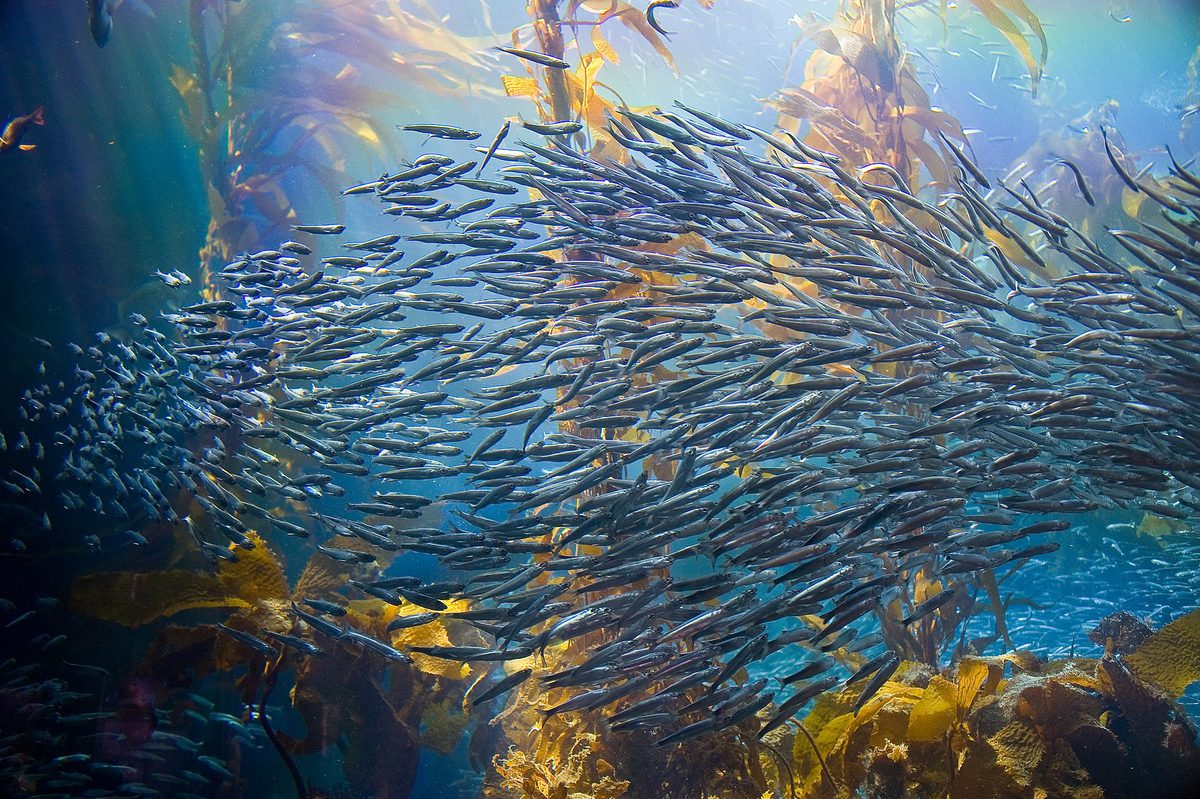
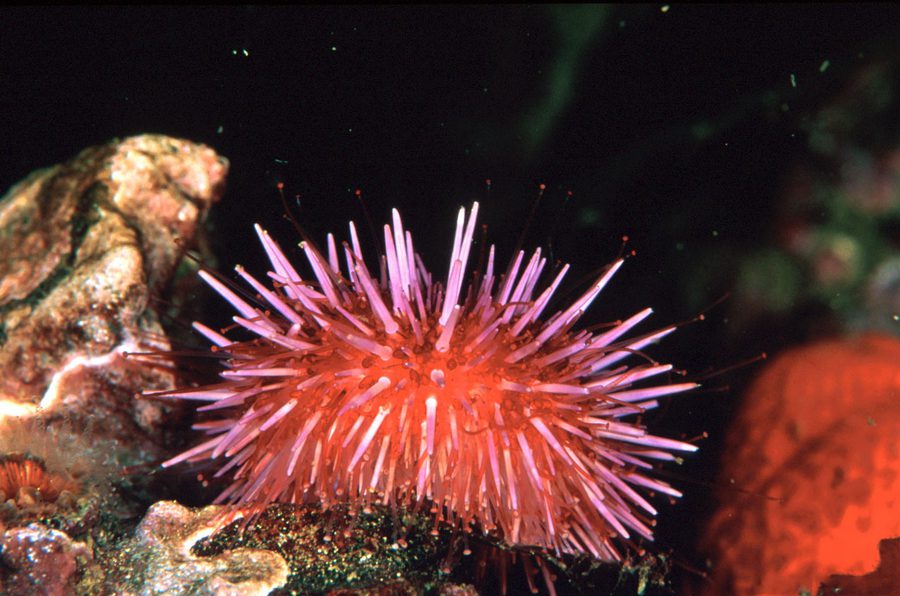
On the Pacific coast of North America, sea otters eat sea urchins, urchins eat kelp, and where otters were hunted out the urchins multiplied and stripped the kelp forests to bare rock. Bring the otters back and the kelp returns. The relationship between otters and kelp is not a feeding one at all — otters do not eat kelp — and yet removing otters destroys kelp forests. Interactions run through networks, and the effect of a species is often on something it never touches.
The kinds of interaction are named by who gains and who loses. Competition is two organisms needing the same limited resource, so both do worse than either would alone. Predation is one organism killing and eating another. Mutualism is a relationship in which both gain — bees and flowering plants, or the fungi that wrap around tree roots and trade minerals for sugars. Parasitism is one gaining at the other's expense without usually killing it quickly. The categories are about outcomes, so the same pair of species can sit in different categories under different conditions.
A disturbance is an event that disrupts a community — a fire, a flood, a storm, a drought, a felling. Disturbances are not simply damage. Many communities are shaped by them, and some species depend on them: seeds that germinate only after fire, plants that need bare ground opened by a flood. What matters for this unit is that a disturbance and a biological interaction can produce the same visible change, which is why a record showing two things happening at once rarely identifies a cause by itself.
Build your understanding
Where this fits
The last chapter followed matter and energy and counted populations. This chapter is about the relationships between species and about using evidence to decide what to do, which is where ecology meets practical judgement. The first unit names the kinds of interaction and shows why separating two plausible causes is the central difficulty.
Use three flexible 40–45-minute sessions: core background and Parts 1–2 with their checks; Parts 3–4 and the worked application; then remaining practice, a labeled model, revision, and the exit check. Checks completed during reading can count toward the practice set. Read one short part at a time. Investigations and chapter review/quiz have separate sessions, and flexible weeks allow more time.
Part 1 · Naming an interaction by its effects
Classify by who gains and who loses, because that is what the categories mean. Both lose: competition. One gains, one is killed: predation. Both gain: mutualism. One gains, one is harmed over time: parasitism. Working from effects rather than from appearances keeps the classification honest for unfamiliar cases.
The categories are not fixed labels on species pairs. A fungus living in a plant's roots may be mutualistic when soil minerals are scarce and the trade is worth it, and closer to parasitic when they are abundant and the plant is paying for nothing. Describing the relationship under stated conditions is more accurate than assigning a permanent category.
Competition is the one most often missed, because nothing visible happens between the competitors. Two plants competing for light do not interact directly at all; each simply does less well than it would alone. The evidence for competition is usually a comparison — how each does with the other present and absent — rather than an observation of anything happening.
Pause and explain
How would you establish that two plant species are competing, given that nothing visible happens between them?
Check your reasoning after answering
By comparison rather than observation. Grow each species alone and together in matched conditions, and compare how each performs. If each does worse with the other present, they are competing for a shared limited resource. The evidence is the difference between the two situations, since competition produces no visible event to watch.
Part 2 · Effects travel through networks
The otter case shows the general pattern: a change in one species propagates through the connections to species it never contacts. Removing otters releases urchins; abundant urchins strip the kelp; losing kelp removes the habitat that many fish and invertebrates depend on. Three steps from a change to an effect, and the first and last species have no direct relationship.
This is why predicting ecological consequences is genuinely hard rather than merely laborious. The paths are multiple, they can partly cancel, and the strengths are usually unknown — which is the limitation the food web unit identified. Effects also arrive with delays, so a change can appear years after its cause.
What follows practically is a habit of tracing paths rather than naming a culprit. When something changes in a community, write out the connections it could act through, ask which of them could produce the observed effect, and look for evidence that distinguishes them. Naming one cause without doing that is usually choosing the most memorable candidate rather than the best supported one.
Pause and explain
Otters do not eat kelp. How can removing otters destroy a kelp forest?
Check your reasoning after answering
Through an intermediate species. Otters eat sea urchins, and urchins eat kelp, so removing otters allows urchin numbers to rise and the urchins strip the kelp. The effect travels along a chain of connections, which is why a species can matter greatly to another it never touches, and why tracing paths matters more than naming direct relationships.
Part 3 · Two things happening at once is not a cause
Suppose records show plant cover falling from 80% to 50% while a herbivore count rises from 10 to 20 — and a drought occurs over the same period. Two explanations are available immediately. Increased herbivory could reduce cover. Drought could limit plant growth. Both are plausible, both are consistent with the record, and the record cannot distinguish them.
It is also likely that both contributed, and in a way that compounds: drought-stressed plants recover more slowly from being grazed, so the same number of herbivores does more damage in a dry year than a wet one. Treating the two as rival explanations where only one can be right is often the wrong framing.
Distinguishing them needs evidence aimed at the question. Fenced plots excluding herbivores, with everything else the same, separate grazing from drought directly. Comparable sites that had the drought without the herbivore increase do the same from the other direction. Soil moisture records establish how severe the drought was. Feeding observations establish what the herbivores actually ate. Each piece targets one of the two, which is what a correlation alone cannot do.
Pause and explain
Plant cover falls while herbivores increase and a drought occurs. What single piece of evidence would best separate the two causes?
Check your reasoning after answering
Fenced plots that exclude the herbivores while leaving everything else the same, including the drought. If cover inside the fences stays high, grazing is the main cause; if it falls similarly, the drought is doing the work. The comparison isolates one factor, which two simultaneous records never can.
Part 4 · Stability, disturbance and recovery
Communities are not static, and stability does not mean unchanging. Populations fluctuate, species move in and out, and conditions vary between years. What ecologists usually mean by a stable community is one that returns to something like its former state after a disturbance rather than shifting permanently.
Many communities are shaped by regular disturbance. Some grasslands depend on grazing or fire to stop trees taking over; some forest species germinate only after a fire has cleared the ground and heated their seeds; floodplain plants need the bare silt a flood leaves behind. Removing a disturbance a community is adapted to changes it as surely as adding one.
Recovery depends on what survived and what can return. Seeds in the soil, roots that resprout, nearby populations that can recolonise — these determine whether a disturbed site returns to what it was. Where those are gone, as with kelp stripped to bare rock over a wide area, the community may settle into a different state that persists, which is why damage and recovery are not symmetrical.
Pause and explain
Why is removing a regular disturbance, such as fire, sometimes as disruptive as adding one?
Check your reasoning after answering
Because communities adapted to regular disturbance depend on it. Some grasslands stay grassland because grazing or fire prevents trees establishing, and some species germinate only after fire has cleared ground and heated their seeds. Remove the disturbance and the community shifts to a different state, which is a change in the same way an added disturbance is.
Apply the whole unit · Assess an interaction claim
Illustrative records, not surveyed data: plant cover falls from 80% to 50% over an interval while a herbivore count rises from 10 to 20. A drought also occurs during the same interval.
Your task
Describe the recorded changes, explain two plausible contributions, and propose evidence that would separate them.
What your response should show
- Explain the relevant biological process accurately.
- Use the supplied evidence and show calculation steps with units where needed.
- Connect a labeled model or mechanism with the claim.
- State an assumption, evidence limitation, or useful next observation.
Response guidance — after your attempt
Describe the changes numerically: cover falls by 30 percentage points, from 80% to 50%, while the herbivore count doubles from 10 to 20.
Give the first plausible contribution: more herbivores grazing more heavily could reduce plant cover directly.
Give the second: drought could limit plant growth and slow recovery, reducing cover with no change in grazing pressure.
Propose evidence that separates them: fenced plots excluding herbivores under the same drought, comparable sites with drought but no herbivore increase, soil moisture records, and feeding observations.
The records show plant cover falling by 30 percentage points, from 80% to 50%, while the herbivore count doubles from 10 to 20, with a drought over the same interval. Two contributions are plausible and the record supports neither over the other. More herbivores could be grazing more plant material, reducing cover directly. Drought could be limiting plant growth and slowing regrowth, reducing cover with no change in grazing at all. It is also likely that both acted together and compounded: a drought-stressed plant recovers more slowly from being grazed, so the same herbivores do more damage in a dry year, which means treating the two as rivals where only one can win may be the wrong framing from the start. Separating them requires evidence aimed at one factor at a time. Fenced plots that exclude herbivores while experiencing the same drought are the most direct test: if cover inside stays high, grazing is doing the work, and if it falls similarly, the drought is. Comparable sites that had the drought without a herbivore increase test it from the other side. Soil moisture records establish how severe the drought actually was rather than assuming it, and feeding observations establish what the herbivores ate and in what quantity. Two further limits are worth stating: the record gives no interval length, so none of these changes can be expressed as a rate, and a single site observed once cannot distinguish an unusual year from a trend.
Scientific references for this unit
Parent / teacher teaching notes
Ask for a because-statement and a labeled relationship, not just a memorized word. Work through one calculation step at a time, permit oral or diagram responses, and use flexible sessions for difficult reading. Compare the learner’s actual evidence with the supplied model; do not reward copying or agreement with a personal preference. No private family, genetic, or medical records are required.
The key idea
Organisms interact through feeding, competition, and other relationships. Predation involves one organism consuming another; competition concerns overlapping use of limited resources. Some relationships benefit both participants, while others benefit one and harm another. The effect must be explained within a defined context rather than assigned by an organism’s reputation.
Worked examples
Example 1 · Classify by outcome, not appearance
- Apply the definitions by outcome: both gaining is mutualism; one gaining at the other's expense is parasitism.
- Assess the mineral-poor case: the tree gains minerals it could not otherwise obtain and pays in sugars, so both gain.
- Assess the mineral-rich case: the tree supplies sugars for a benefit it does not need, so the balance shifts against it.
Classify by who gains and loses now, not by a label attached to the species.
Example 2 · Trace an indirect effect
- Identify what the grazers were doing: cropping young woody plants and keeping the grassland open.
- Follow the first consequence: without grazing, shrubs and tree seedlings establish and grow.
- Follow the second: the open ground the birds needed for nesting is replaced by scrub, so the habitat those species require no longer exists.
Ask what a species was doing to the habitat, not only what it ate.
Avoid these mistakes
- Mistake: a species only affects what it eats. Otters do not eat kelp, and removing them destroys kelp forests through urchins; effects travel along chains.
- Mistake: interaction categories are permanent labels. A root fungus can be mutualistic in poor soil and closer to parasitic in rich soil; describe the relationship under stated conditions.
- Mistake: two things changing together identifies the cause. Rising herbivores and a drought both explain falling cover, and only a comparison that isolates one — such as fenced plots — can separate them.
- Mistake: disturbance is damage. Some grasslands need grazing or fire to remain grassland, and some seeds germinate only after a fire, so removing a disturbance can change a community as much as adding one.
Check your understanding
Does sharing a habitat alone prove competition?
Discuss the answer
No. Resource overlap and limitation, or effects on performance, need evidence.
Why might a predator not fall immediately after one prey declines?
Discuss the answer
Alternative prey, movement, stored resources, and delayed responses can affect its population.
Words to know
- competition
- Two organisms needing the same limited resource, so each does worse than it would alone; the evidence is a comparison, since nothing visible happens between them.
- predation
- One organism killing and eating another; its effects often travel beyond the prey to species the predator never touches.
- mutualism
- A relationship in which both participants gain, such as bees and flowering plants, or root fungi trading minerals for sugars.
- parasitism
- One organism gaining at another's expense over time without usually killing it quickly.
- disturbance
- An event disrupting a community — fire, flood, drought, felling; many communities are shaped by regular disturbance rather than harmed by it.
Extend your scientific explanation
Compare a second supplied example or the linked educational reference. Identify a connection, a model limit, and an additional observation that would test the explanation.
In the real world
Use a clear question, reliable observations, and a biological mechanism to evaluate a claim. State what remains uncertain before applying a classroom model to a different setting.
Exit check
Does recovery require every count to return to its original value?
Check your explanation after answering
Not necessarily. Recovery depends on the defined function or condition; composition and counts can differ.
Explain your reasoning without notes. If a key idea is missing, revisit the lesson and try again.
Problem 1
Answer and explanation
No. Resource overlap and limitation, or effects on performance, need evidence.
Problem 2
Answer and explanation
Alternative prey, movement, stored resources, and delayed responses can affect its population.
Problem 3
Answer and explanation
Relevant feeding evidence and repeated population records, considered with alternative resources and conditions, can strengthen it.
Problem 4
Answer and explanation
Not necessarily. Recovery depends on the defined function or condition; composition and counts can differ.
Problem 5
Answer and explanation
Herbivory could reduce cover, while drought could also limit plant growth. The two recorded changes do not isolate either cause. Compare feeding observations, water conditions, and suitable reference plots across repeated intervals. Plant cover and counts are different measures, and the model should not claim a single cause from their association alone.
Cover falls 30 percentage points.
Herbivore count doubles.
Compare feeding effects with drought and a suitable matched observation.
Response criteria
- Explain the relevant biological process accurately.
- Use the supplied evidence and show calculation steps with units where needed.
- Connect a labeled model or mechanism with the claim.
- State an assumption, evidence limitation, or useful next observation.
Problem 6
Answer and explanation
Different insects can feed, pollinate, shelter, or interact in other ways. Identify effects and resource relationships before classifying the interaction.
Response criteria
- Explain the relevant biological process accurately.
- Use the supplied evidence and show calculation steps with units where needed.
- Connect a labeled model or mechanism with the claim.
- State an assumption, evidence limitation, or useful next observation.
Problem 7
- Shared use of a limiting resource
- Any two different colors
- Every insect landing
- Any pair of graph axes
Answer and explanation
Shared use of a limiting resource
Competition concerns limiting-resource overlap and its effects.
Problem 8
Answer and explanation
25 percentage points
70−45=25 percentage points, distinct from a percent decrease relative to 70.